Thanks to new materials, constructions and technology, wetsuits have become stretchier then ever, which helps getting in and out of a wetsuit. If you can then master all the right techniques to getting your wetsuit on and off, you will ensure you are not causing any damage to your wetsuits, meaning it will serve you for longer.
Getting into a chest zip wetsuit can feel awkward at first, but once you've got the technique right, it becomes much easier.
Chest zip wetsuits are now one of the most popular wetsuit entry systems, particularly on performance wetsuits. Their shorter zip helps maximise flexibility across the shoulders and back, while the chest entry can also reduce flushing compared with a traditional back zip. The trade-off? They can take a little more practice to get on and off.
Here's our step-by-step guide to getting into a chest zip wetsuit without damaging the wetsuit.
Before You Put Your Wetsuit On
A few simple things can make getting into your wetsuit much easier.
Make sure the chest zip is fully open.
Loosen any neck or chest adjustment system.
Remove watches, rings and anything else that could catch or damage the material.
Make sure your fingernails aren't going to snag the suit.
Find somewhere stable to sit or stand if you're struggling with balance.
Take your time. Forcing the wetsuit is one of the easiest ways to damage a wetsuit.
If you're putting on a brand-new wetsuit, don't be surprised if it feels very tight at first. A wetsuit should fit closely against your body, but you shouldn't need to fight it into position.
How to Put On a Chest Zip Wetsuit
Step 1: Open the Chest Entry
Start by making sure the chest zip is completely undone and the entry system is opened as far as possible.
Reach inside the chest opening and gently pull the material apart around the shoulders and armpits. This creates as much room as possible for getting your body and arms into the suit.
Don't pull aggressively on the zip or thin sections of material.
Step 2: Put Your Legs In
Start with one leg at a time.
Guide your foot through the leg opening and carefully work the wetsuit over your foot and ankle. Continue pulling the suit gradually up your leg until it sits correctly around your knee.
Repeat with the other leg.
Top tip: If you're struggling to get your feet through a tight ankle opening, a thin plastic bag over your foot can help the wetsuit slide more easily. Remove the bag once your foot is through.
Step 3: Pull the Wetsuit Up to Your Waist
Once both legs are in, gradually work the wetsuit upwards.
Pull the suit over your calves, knees, thighs and hips until the suit is sitting correctly around your waist.
Don't simply pull from the top of the suit. Instead, work the suit upwards section by section and smooth out any bunching as you go.
This is important because leaving excess material around your knees, thighs or hips can make the rest of the suit much harder to put on.
Step 4: Pull the Suit Up Over Your Torso
Continue working the wetsuit upwards until it sits comfortably around your chest and shoulders.
Make sure the leg seams and knee panels are sitting in the correct position and that there isn't excess material bunched around your waist.
The suit should feel snug against your body without restricting your breathing or movement.
Step 5: Put Your First Arm Into the Sleeve
Now it's time to put your arms in.
With chest zip wetsuits, the opening is designed to stretch so you can work your arms through the shoulders without needing to force the wetsuit.
Insert your first arm through the sleeve and gently pull the material upwards towards your shoulder.
Don't grab the suit with your fingertips and yank. Instead, use your palms and flat fingers to gradually work the neoprene into position.
Step 6: Put Your Second Arm In
Repeat the process with your other arm.
Once both arms are through, check the shoulders and upper back.
There shouldn't be large folds or bunches of material. If there are, gently adjust the material until the suit sits smoothly across your shoulders and chest.
Some chest zip designs have a fixed zip on one side, while others allow the chest panel to open more fully. The exact order for putting your arms in can therefore vary slightly between wetsuit designs.
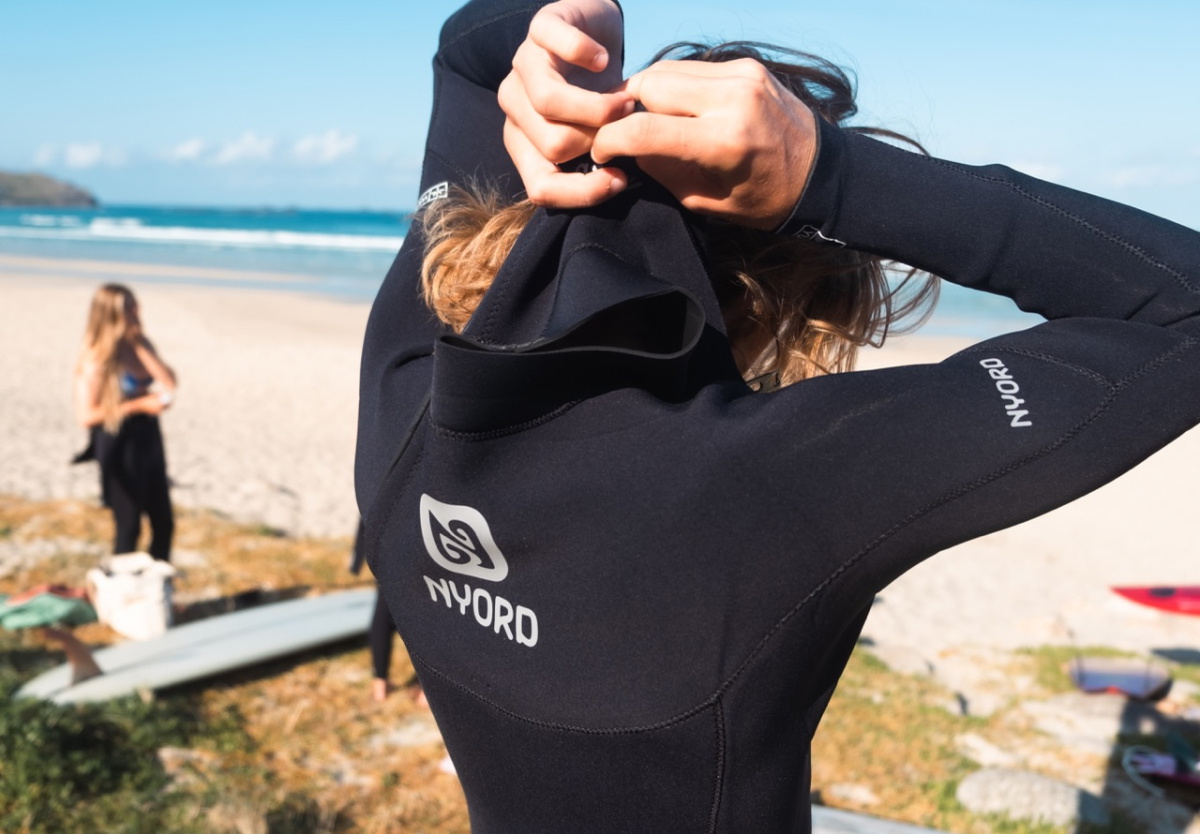
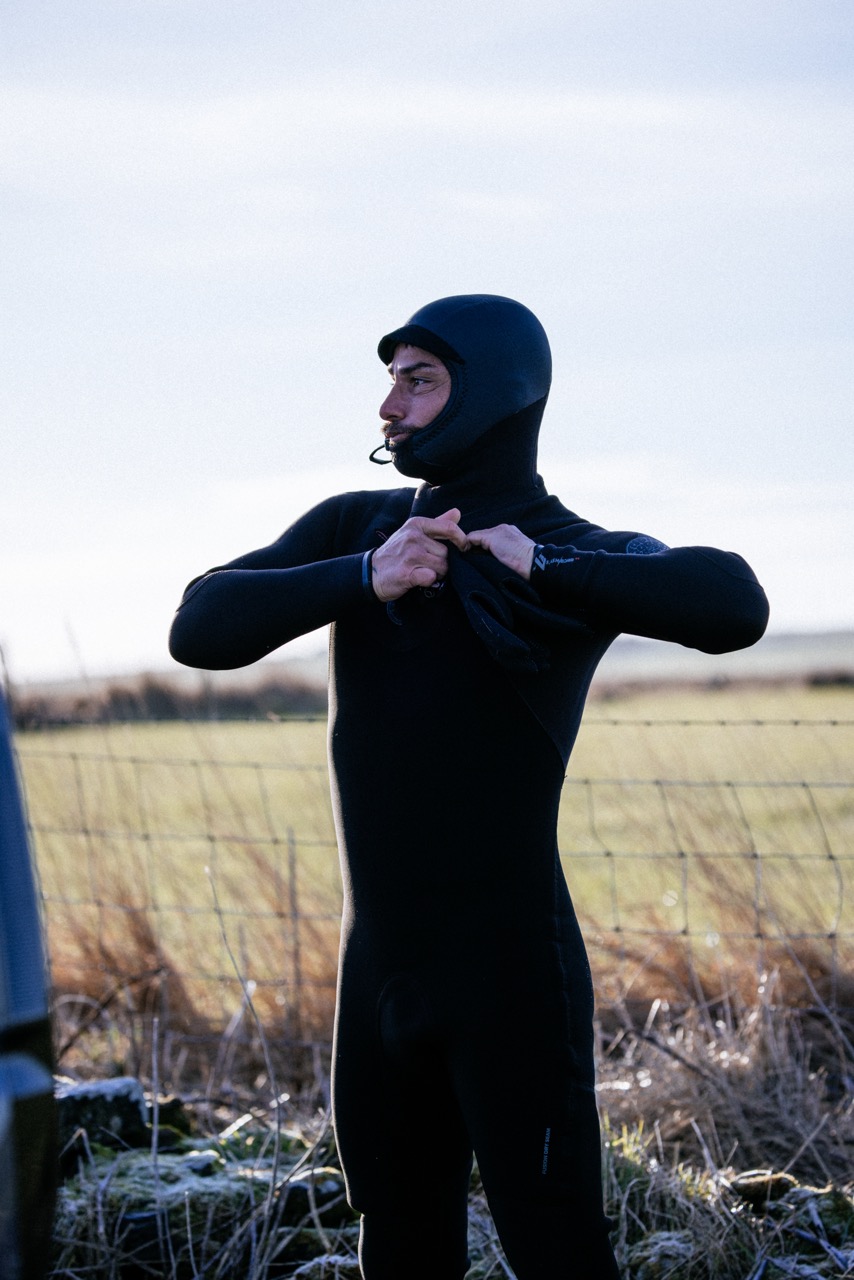
Step 7: Pull the Chest Panel Over Your Head
Once your arms and shoulders are correctly positioned, it's time to bring the chest entry over your head.
Gently pull the neck/chest panel up and over your head.
Take your time here. This is often the trickiest part of getting into a chest zip wetsuit, particularly when the suit is new.
Never force the wetsuit over your head or pull hard on the zip.
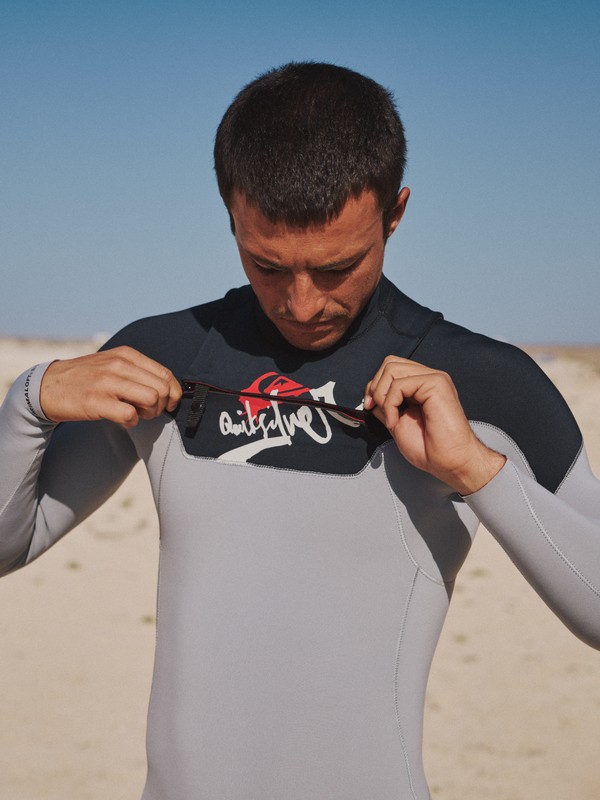
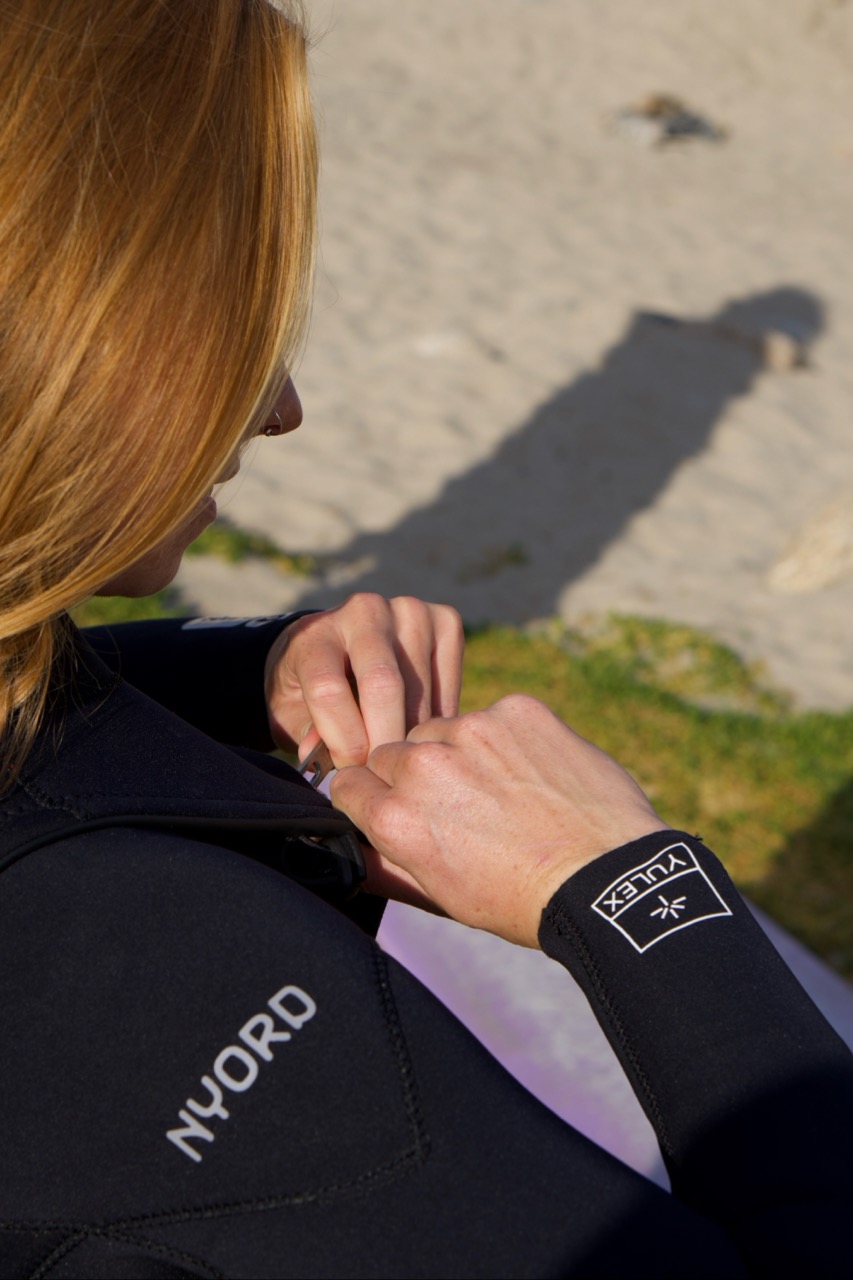
Step 8: Close the Chest Zip
Once the chest panel is in position, align the zip and close it carefully.
Depending on the wetsuit, the zip may be fully detachable or remain attached to one side.
Pull the zip smoothly rather than forcing it. If it catches, stop and check that no material or lining is trapped in the zip.
Once closed, secure any Velcro, toggle, snap or adjustment system around the chest or neck.
Step 9: Check the Fit
Before heading into the water, take a few seconds to check the suit.
Move your arms above your head, rotate your shoulders and bend your knees.
The wetsuit should feel:
Snug against your body
Smooth across your chest and back
Comfortable around your neck
Free from large folds or bunches
Flexible enough to move your shoulders and arms
If you feel excessive pressure around your neck or shoulders, check that the wetsuit is properly positioned before assuming you need a larger size.
How to Take Off a Chest Zip Wetsuit
Getting out of a chest zip wetsuit can sometimes be harder than getting into one, particularly when the suit is wet and you're tired after a surf.
The key is to peel the wetsuit off gradually rather than pulling aggressively.
Fully open the chest zip and any fasteners.
Pull the chest panel gently back over your head.
Peel the wetsuit away from one shoulder.
Work the sleeve down towards your elbow and free your arm.
Repeat on the other side.
Roll the wetsuit down over your torso and hips.
Gently work the wetsuit down each leg.
Free your feet one at a time.
Avoid standing on the wetsuit while trying to pull it off. This can put unnecessary stress on the seams and wetsuit.
Common Chest Zip Wetsuit Mistakes
Pulling the material with your fingertips
One of the biggest mistakes when putting on a wetsuit is grabbing a small section of material and pulling hard.
This can overstretch the material and, over time, damage the suit.
Instead, use the palms of your hands and gradually work the suit into position.
Trying to zip the suit before it's properly positioned
If the wetsuit is bunched around your shoulders or chest, don't try to force the zip closed.
Stop, adjust the wetsuit and make sure the chest panel is sitting correctly before closing the zip.
Leaving excess material around your legs
If the suit hasn't been pulled properly over your knees and hips, you'll often struggle when you reach the upper body.
Work the wetsuit gradually up each leg and smooth out excess material before moving on.
Rushing
Chest zip wetsuits take a little more technique than back zip suits.
The quickest way to get into one is usually to slow down, rather than trying to force it.
Wearing the wrong size
A wetsuit should feel snug. However, it shouldn't cause significant restriction around your shoulders, chest or neck.
If you're constantly struggling to get into a suit or can't achieve a comfortable fit once it's on, it may be worth checking the size and fit.
Why Choose a Chest Zip Wetsuit?
Chest zip wetsuits have become increasingly popular because the shorter zip allows more flexibility through the shoulders and upper back.
They can also reduce the amount of water entering through the zip compared with some traditional back zip designs.
The result is a close-fitting, performance-focused wetsuit that works particularly well for surfing and other activities where freedom of movement is important.
The main downside is that they can be slightly trickier to get into than a back zip wetsuit. Once you've mastered the technique, however, the process becomes much quicker and more natural.
Chest Zip vs Back Zip: Which Is Easier?
If you're deciding between entry systems, there are a few things to consider.
Back zip wetsuits are generally easier to get into, making them a popular choice for beginners or anyone who prioritises ease of changing.
Chest zip wetsuits require a little more technique but offer greater freedom of movement through the upper body and can help reduce flushing through the zip area.
Neither system is automatically better for every surfer. Your choice should come down to your experience, fit, priorities and the type of surfing you do.
How to Make Your Wetsuit Easier to Put On
If you're still struggling with your chest zip wetsuit, try these simple tips:
Take your time. Don't rush the process, particularly with a new wetsuit.
Use a changing mat. This gives you somewhere clean and stable to stand while protecting your wetsuit from sharp stones, grit and other abrasive surfaces.
Sit down if you need to. There's no prize for getting changed standing up. Sitting down can make getting your feet and legs into the suit much easier.
Use a plastic bag on your feet. A thin plastic bag can help your foot slide through a tight ankle opening.
Use your palms, not your fingertips. This helps distribute pressure across the wetsuit and reduces the risk of damaging it.
Make sure the suit is the right size. A correctly fitting wetsuit should be snug but shouldn't feel impossible to put on.
Ready to Get Into the Water?
Looking for a new wetsuit? Explore our full range of wetsuits for men, women and kids, with suits available across a wide range of thicknesses, brands and price points.